
Five‑Year Cancer Survival Reaches 70% — A Milestone Decades in the Making
- New data from the American Cancer Society shows major progress in cancer survival, with nearly 70% of people now living at least five years after diagnosis and an estimated 4.8 million deaths prevented since 1991.
- Public‑health gains and better treatments are driving the improvement, including reduced smoking rates, expanded screening, and more effective therapies — pushing overall 5‑year survival from 63% in the 1990s to 70% today, with even larger jumps in regional and metastatic disease.
- High-mortality cancers are seeing some of the most dramatic advances, with survival rising sharply in myeloma, liver cancer, metastatic melanoma, metastatic rectal cancer, and both regional and metastatic lung cancer — a clear sign that continued research is changing outcomes for the better.
- Some high-profile survivors thriving more than five years after being diagnosed with cancer include “Ghostbusters” star Ernie Hudson, 80, who was diagnosed with prostate cancer in 1998 and rectal cancer in 2011.
- Hudson credits his ability to beat both cancers to routine screening for catching the cancers early, followed by treatment. He says he is “cancer-free” today.
- “Law and Order” actress Maura Tierney, 60, is 16 years in remission after being diagnosed with early-stage breast cancer at 44, defying the odds and statistics that typically associate breast cancer risk with older age.
- After undergoing treatment, which included a mastectomy (removal of the breast) and chemotherapy, once in remission, Tierney said, “I’m deeply grateful for my family and for science, technology, and medicine.”
Researchers say the steady drop in cancer deaths through 2023 has already saved an estimated 4.8 million lives since 1991 — a striking sign of just how far detection and treatment have come.
Read MoreImproving Cancer Survivor Rate
7 in 10 people or 70% of patients now live five years after their cancer diagnosis.
Source: CA: A Cancer Journal for Clinicians
The cancer mortality rate continued to decline through 2023, averting 4.8 million deaths since 1991, largely because of smoking reductions, earlier detection, and improved treatment.
Survival has climbed dramatically for diseases like:
- Myeloma 32% to 62%
- Liver cancer 7% to 22%
- Metastatic melanoma 16% to 35%
- Metastatic rectal cancer 8% to 18%
- Regional lung cancer 20% to 37%
- Metastatic lung cancer 2% to 10%
It’s a powerful marker of how far cancer care has come — and a reminder that continued investment in research is moving outcomes in the right direction. As SurvivorNet reflects on this progress, we’re spotlighting survivors who embody what it means to thrive more than five years after a diagnosis.
How Continued Research Is Pushing Cancer Care Forward
- ‘We’re Just Going To Keep At It’: SurvivorNet Sits Down With the CEO of Ovarian Cancer Research Alliance
- A Cancer Vaccine? Small Study Shows Enough Promise To Warrant More Research
- Breastfeeding Can Reduce the Risk of the Deadliest Type of Ovarian Cancer, New Research Shows
- Can Statin Use Improve Breast Cancer Survival? New Research Shows ‘Significant Association’ for Triple-Negative Breast Cancer Patients
- Do Clinical Trials Help Cancer Patients? New Research Shows Increased Efficiency & Accuracy May Lead to Better Trial Outcomes
- Genetics Help Researchers Get Closer To A Cure
- ‘This Is Really Practice-Changing’: New Therapy Provides Hope for More Patients With Large B-Cell Lymphoma
Andrea Mitchell Was Diagnosed In 2011
Veteran journalist Andrea Mitchell, 79, admitted she once delayed getting breast reconstruction following her cancer diagnosis to continue covering the presidential campaign.

Mitchell has been a staple for news viewers for more than four decades. She was in her mid-60s when her cancer was detected following a routine breast cancer screening.
At the time, the foreign affairs journalist was gearing up for a hiking trip in Wyoming. Cancer was seemingly the last thing on her mind until she learned she had a new and pressing challenge before her. Always chasing a news story, at the time of her diagnosis, the 2012 Presidential campaign was well underway. Mitchell admitted she delayed her breast cancer treatment because of campaign news coverage.
“I put off reconstruction after my mastectomy because I wanted to get through the Republican primaries first. I didn’t want to be out again for surgery,” Mitchell said, according to The Hill.
“Breast reconstruction is a restoration of a woman’s form and her sense of self,” says Dr. Andrea Pusic, Chief of Plastic and Reconstructive Surgery at Brigham and Women’s Hospital.

Many different options and techniques are available to get the reconstruction, meaning immediate (at the time of mastectomy) or delayed (which could be months or years later).
WATCH: When to consider a mastectomy.
Depending on your cancer treatment plan and the type of reconstruction you will have, you might be able to begin breast reconstruction during the same surgery as your breast cancer surgery.
Immediate reconstruction can get better results than delayed reconstruction, meaning fewer surgeries. However, it may indicate a more extended initial hospitalization and recovery time. This long surgery may also have a higher risk for complications, such as infections, than two separate surgeries.
“Delayed reconstruction,” Dr. Terry Myckatyn, a board certified by the American Board of Plastic Surgery, explains, “according to most studies, has fewer complications than immediate reconstruction.”
During that campaign cycle, the primaries lasted for several months. Mitchell jokingly said before a Washington, D.C. crowd, “It went on so long, I thought it would never end because I knew I had to get back into the hospital.”
“Luckily for me, I am one of the fortunate ones; we discovered it in the earliest stage, it hadn’t spread, and I’m already back at work with a terrific prognosis,” Mitchell explained to NBC News following her 2011 diagnosis.
Vanessa Bell Calloway Was Diagnosed In 2009
“Coming to America” actress Vanessa Bell Calloway, 68, is 16-years in remission after battling breast cancer.
In 2009, Calloway awoke from sleep with what she described as a strange urge to get checked, despite having no signs of breast cancer.

“I struggled to shake the feeling, as if something was wrong with me,” she recalled. That instinct led her to schedule a checkup, where her doctor asked when she’d last had a mammogram.
“I had missed my test that year by about four months, because the clinic I frequented had closed,” Calloway told Essence Magazine.
She booked a same-day exam at a different clinic, and the results revealed something suspicious. “I told myself at that moment, ‘That’s what God was telling me.’”
A follow-up biopsy confirmed stage zero breast cancer — ductal carcinoma in situ — a non-invasive form of the disease that begins in the breast ducts and is highly treatable when caught early.

“After my doctor and I determined I’d undergo a lumpectomy instead of a mastectomy, which he initially recommended,” she explained, “within weeks I underwent the procedure,” she said.
But her journey didn’t end there. The results from her first surgery were concerning.
“He was not pleased with the margins and suggested another. But I wasn’t alarmed,” she said. A second lumpectomy on her other breast followed — and again, the results were “not good.”
WATCH: Should I Have a Lumpectomy or Mastectomy?
Calloway received the news while shopping for hair supplies. Her doctor told her she needed a mastectomy. “I was hysterical. I was crying in the back of the store,” she said. “I wanted to throw things.”
She shared the news with her family. Her husband offered steady support, but her children responded in different ways.
“While my 19-year-old cried and comforted me, my 15-year-old reacted differently. She didn’t weep. She didn’t hug me. She couldn’t touch me or look at me. She stayed away from me. I later found out she was just terrified.”
Calloway underwent a mastectomy followed by breast reconstruction — a decision that, for many women, carries deep emotional weight. Though the surgery may only take hours, the psychological adjustment can linger for months or even years.
WATCH: Regaining your sense of self after reconstruction.
Just three months later, Calloway returned to the screen, appearing alongside Jada Pinkett Smith in TNT’s “Hawthorne.”
“It was such a blessing because I still needed to wear my healing undergarments, and my character wore scrubs and flat shoes. It was perfect. No one knew what I had gone through until after I was cured,” Calloway said.
How Continued Research Is Pushing Cancer Care Forward
- ‘We’re Just Going To Keep At It’: SurvivorNet Sits Down With the CEO of Ovarian Cancer Research Alliance
- A Cancer Vaccine? Small Study Shows Enough Promise To Warrant More Research
- Breastfeeding Can Reduce the Risk of the Deadliest Type of Ovarian Cancer, New Research Shows
- Can Statin Use Improve Breast Cancer Survival? New Research Shows ‘Significant Association’ for Triple-Negative Breast Cancer Patients
- Do Clinical Trials Help Cancer Patients? New Research Shows Increased Efficiency & Accuracy May Lead to Better Trial Outcomes
- Genetics Help Researchers Get Closer To A Cure
- ‘This Is Really Practice-Changing’: New Therapy Provides Hope for More Patients With Large B-Cell Lymphoma
Ernie Hudson Was Diagnosed In 1998 and Again In 2011
“Ghostbusters” star Ernie Hudson, 80, continues to inspire with his ageless presence and enduring vitality. Behind his charm is a two-time cancer survivor who’s faced rectal and prostate cancer.
Hudson’s breakout role was his portrayal of Winston Zeddmore in the popular 1980s film “Ghostbusters.” Since that production, he’s maintained an active role in television and films. He also starred in the late ’90s TV series “Oz,” and around the 2010s, he starred in “The Secret Life of the American Teenager” as Dr. Ken Fields.
However, in 1998, his television appearances were more sporadic as he dealt with prostate cancer.
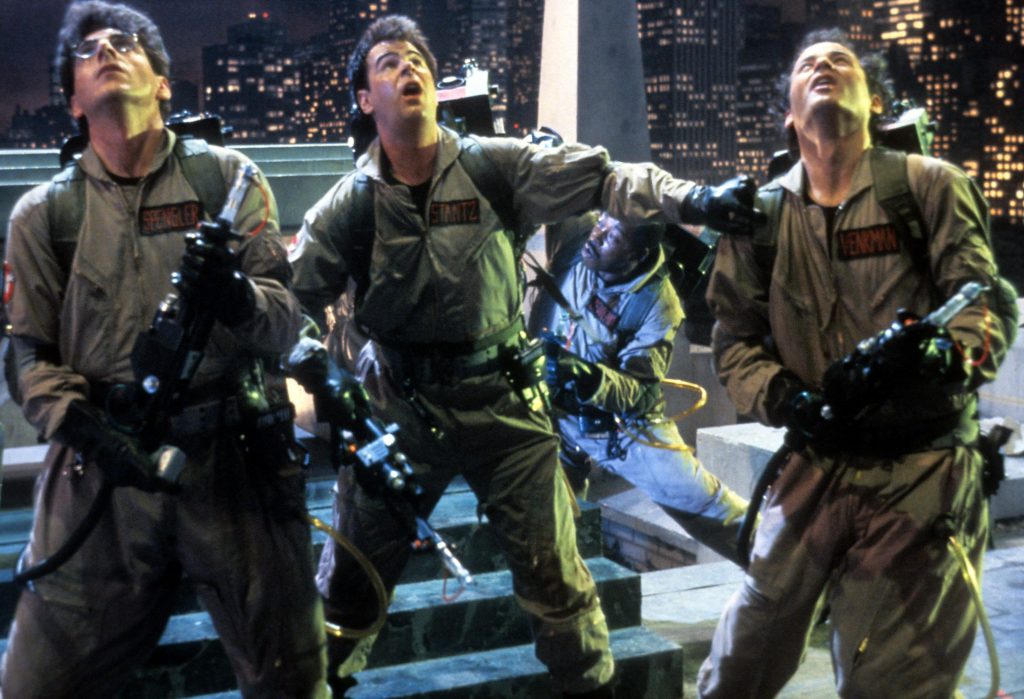
“When I heard the word cancer, it was one of the most devastating moments in my life,” Hudson previously shared with Fox59 News.
Hudson discovered his cancer early after undergoing routine screening.
When you do get screened for prostate cancer, your doctor will run a few tests.

One of the tests is the PSA test, a simple blood test that screens for prostate cancer. It looks for more significant amounts of protein-specific antigen (PSA) in the blood. An elevated PSA test does not always mean you have prostate cancer. It could also reflect that your prostate is enlarged, which is common, or it could signal an infection or inflammation.
Your doctor may also conduct a digital rectal exam (DRE) to check your prostate for lumps.
Depending on the results of these tests, imaging scans and a biopsy may be ordered.
WATCH: How Gleason Grade Determines Treatment
After tests are conducted, your doctor analyzes the results to give you a Gleason Score. This score ranges from 6 to 10. The higher the score, the more aggressive the cancer.
This score, along with your other test results, helps doctors determine if your cancer is “low risk,” “intermediate risk,” or “high risk.”
Prostate cancer does not always behave the same in every man it impacts. The cancer can be considered “low-risk” and can be slow-growing, and treatment might not be necessary. In other men, the cancer may grow faster or more aggressively, requiring more immediate treatment. Because of this, there is some debate about screening.
The United States Preventive Services Taskforce recommends men at average risk between the ages of 55 and 69 years old should talk with their doctor about the pros and cons of prostate cancer screening.
The American Cancer Society recommends that men at age 50 who are at average risk should begin screening. Men who are at high risk of prostate cancer should begin screening at age 40. Men with a close relative diagnosed with prostate cancer should consider annual screenings in their 30s.
Most doctors agree that men over the age of 70 do not need screening.
Hudson was also diagnosed with rectal cancer in 2011.

Ernie Hudson
‘Grace and Frankie’ Season 3 premiere, Los Angeles, USA – 22 Mar 2017
According to the National Cancer Institute, rectal cancer forms in the tissues of the rectum. This type of cancer shares common symptoms associated with colorectal cancer, which include changes in bowel habits, blood in stool, bloating, and unexplained weight loss.
Hudson previously told Fox19 News that after being diagnosed with rectal cancer, his treatment was “more complicated and came close to dying, but due to early prevention, I was able to find it, and now I’m cancer-free.”
Maura Tierney (diagnosed in 2009)
Veteran actress Maura Tierney, 60, known for her roles on “Law and Order” and “ER,” is 16 years in remission after battling breast cancer. She was diagnosed at age 44, right as her career was gaining momentum.
“I was very shocked and surprised because of my age,” Tierney shared with Coping Magazine.

Part of Tierney’s shock after her diagnosis stemmed from the likelihood of breast cancer risk growing as you age. Most people diagnosed with breast cancer are 50 or older, according to the Centers for Disease Control and Prevention (CDC).
“I’ve since learned that it’s not that shocking; there are plenty of young women diagnosed with breast cancer,” Tierney said.
It’s a reality echoed by oncologist Dr. Ann Partridge of Boston’s Dana-Farber Cancer Institute, who notes that nearly 11,000 women under 40 are diagnosed each year—facing forms of the disease that are often more aggressive and advanced.
“Young women are more likely to be diagnosed with breast cancer that is more aggressive,” Dr. Partridge told SurvivorNet.
“They’re more likely to have bigger tumors and lymph node involvement at diagnosis… Part of that is because young women aren’t typically being screened,” Dr. Partridge added.
WATCH: When to get a mammogram.
Tierney first noticed a lump in her breast and followed up with a mammogram. It was then her battle began.
She opted for a skin-sparing mastectomy, preserving the breast’s outer shape while removing the tissue. According to research published in Gland Surgery, skin-sparing mastectomies “optimize the cosmetic outcomes of smaller incisions and preserve breast anatomy.”
“It’s scary to think you have to have a mastectomy, but I had a great plastic surgeon and a great reconstruction,” Tierney said.

Following surgery, Tierney underwent chemotherapy—an experience she found mentally taxing despite ultimately tolerable side effects.
“I was very, very afraid of the chemotherapy. I had a tremendous amount of anxiety,” she said. “I worried that I would be so sick that I wouldn’t be able to get up or even leave the house. Fortunately, this turned out to be untrue for me.”
WATCH: Adjusting Chemo to Mitigate Side Effects
Dr. Renata Urban, a gynecologic oncologist at the University of Washington, explained that chemo’s most common side effects—fatigue, nausea, and neuropathy—can vary widely between patients. Some may experience weakness, burning sensations, or difficulty with fine motor skills like buttoning clothes.
Doctors often prescribe anti-nausea medications as part of the treatment regimen to help offset the discomfort before, during, and after chemo.
Tierney credits receiving good information and open communication with her care team as her greatest source of strength.
“When I was going through my cancer treatment, I learned that you can never ask a stupid question,” she said. “I asked every single question that came to mind, and I believe that helped to calm my own anxiety,” the actress continued.

Today, Tierney has “no evidence of disease” and expresses deep gratitude for her recovery.
“I’m deeply grateful for my family and for science, technology, and medicine,” she said.
Learn more about SurvivorNet's rigorous medical review process.


